Democracy for Realists:
Social Groups and Identities
Updated Mar 19, 2026
Current Events/Piloting Survey
Retrospective/Economic Voting
A realist theory of democracy (Chapter 8)
Evidence of the political Relevance of Group Identity (Chapter 9)
Thursday: Pitfalls of group identity
Please click here to register your attendance today.
What are some questions/expectations we might ask?
What does a model like RAS lead us to expect?
What might Achen & Bartels expect?
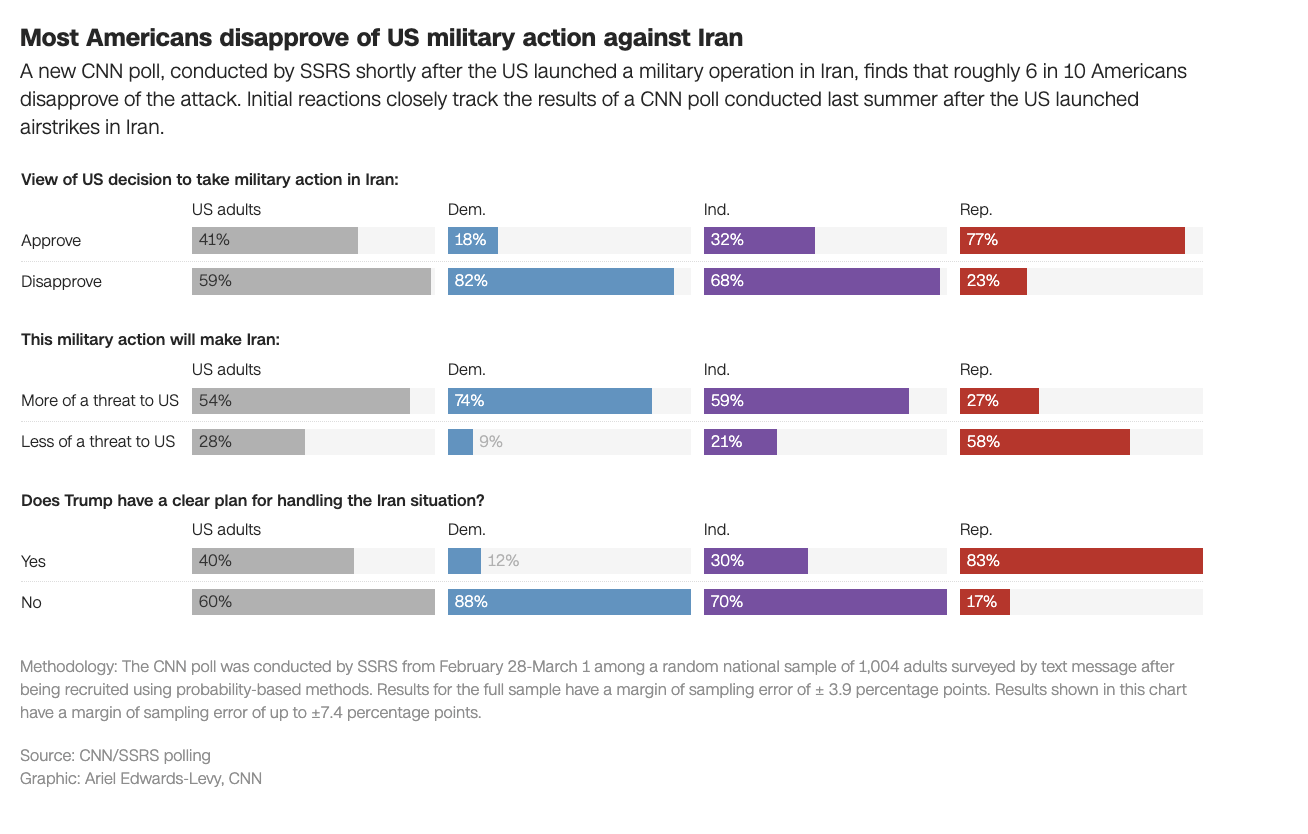
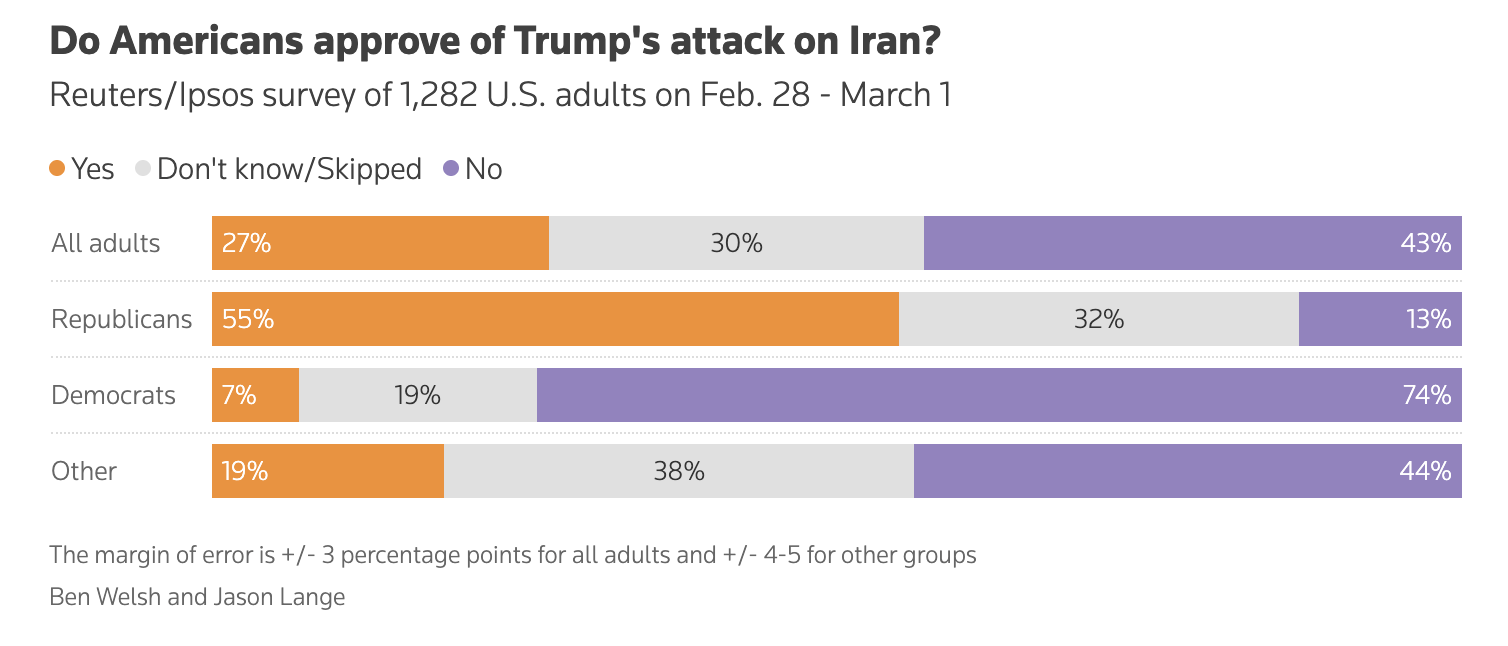
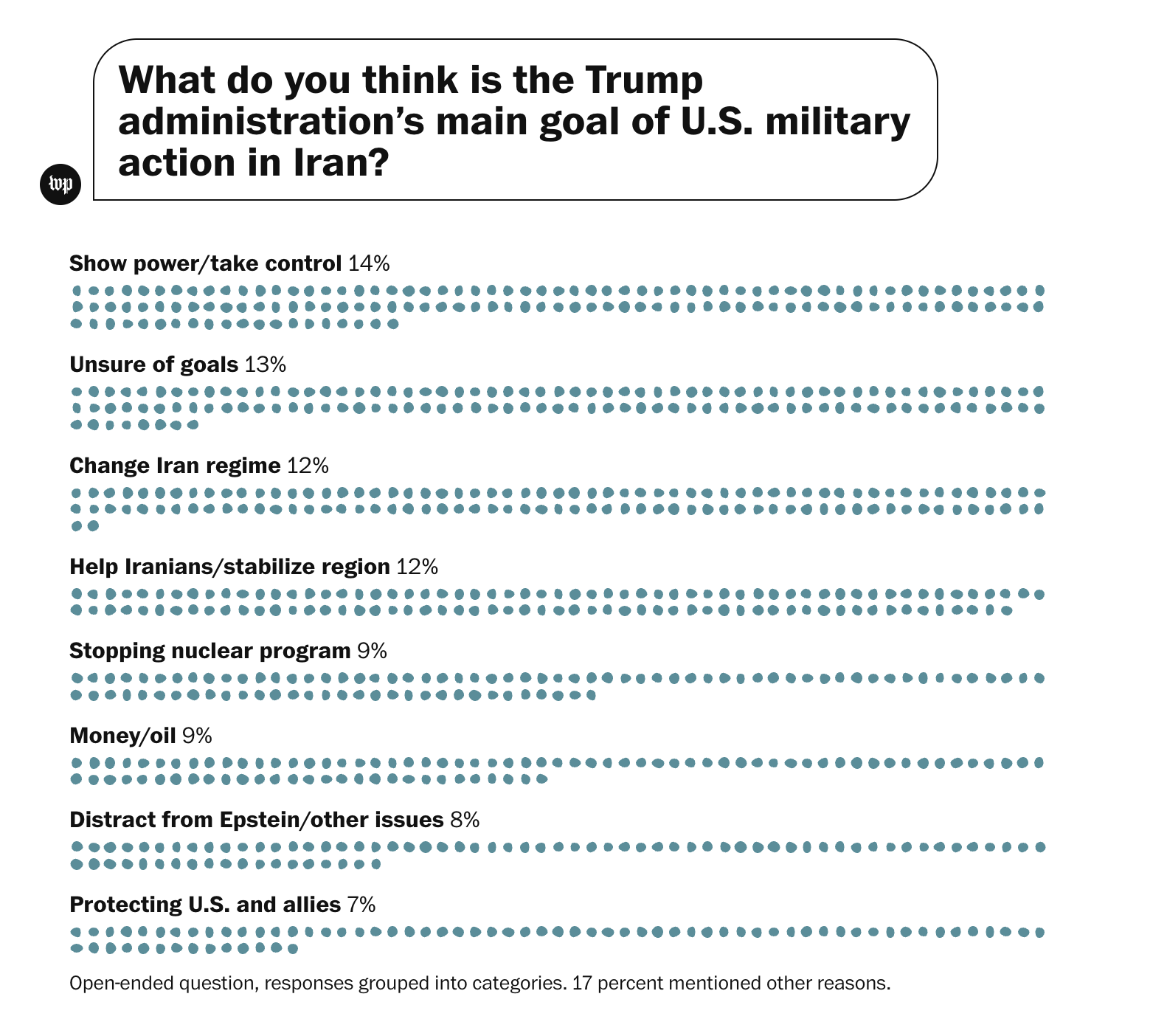
How does the public feel about the current conflict?
How will attitudes change?
Will we see a rally around the flag effect?
What are the consequences for Trump’s Approval/Midterm elections?
Retrospective voting reflects an alternative response to problems raised by Converse (1964)
Redefine the problem of citizen competence
Both models depend on the quality of the information or signal citizens have
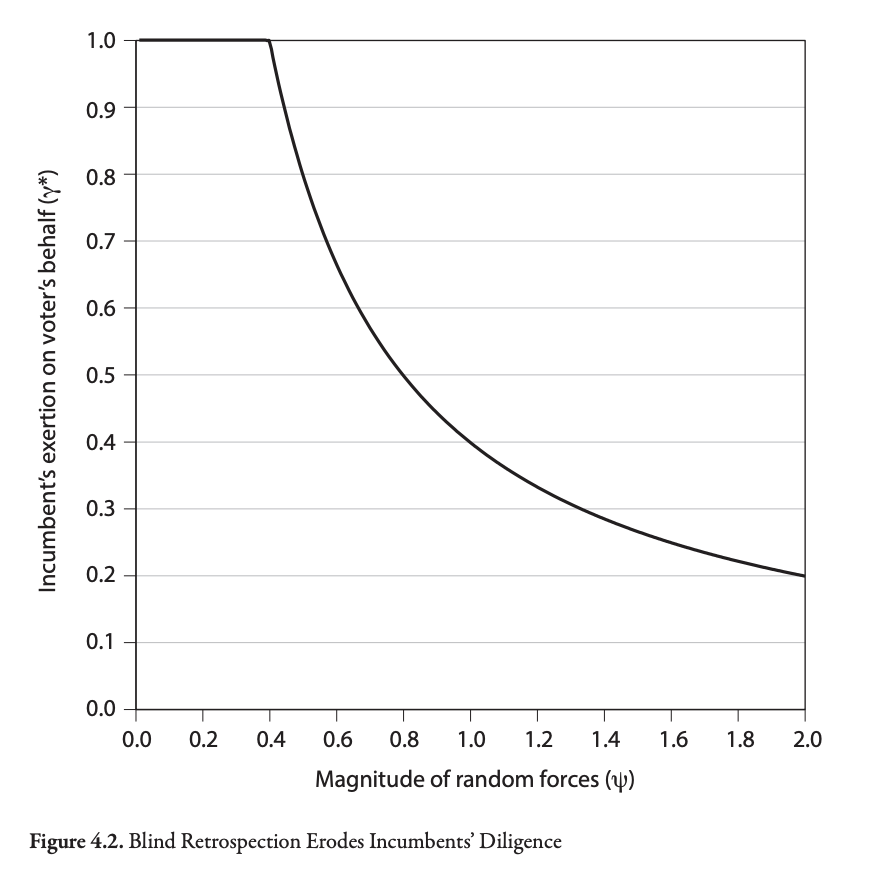
As the information environment becomes noisier, it becomes harder to select good leaders
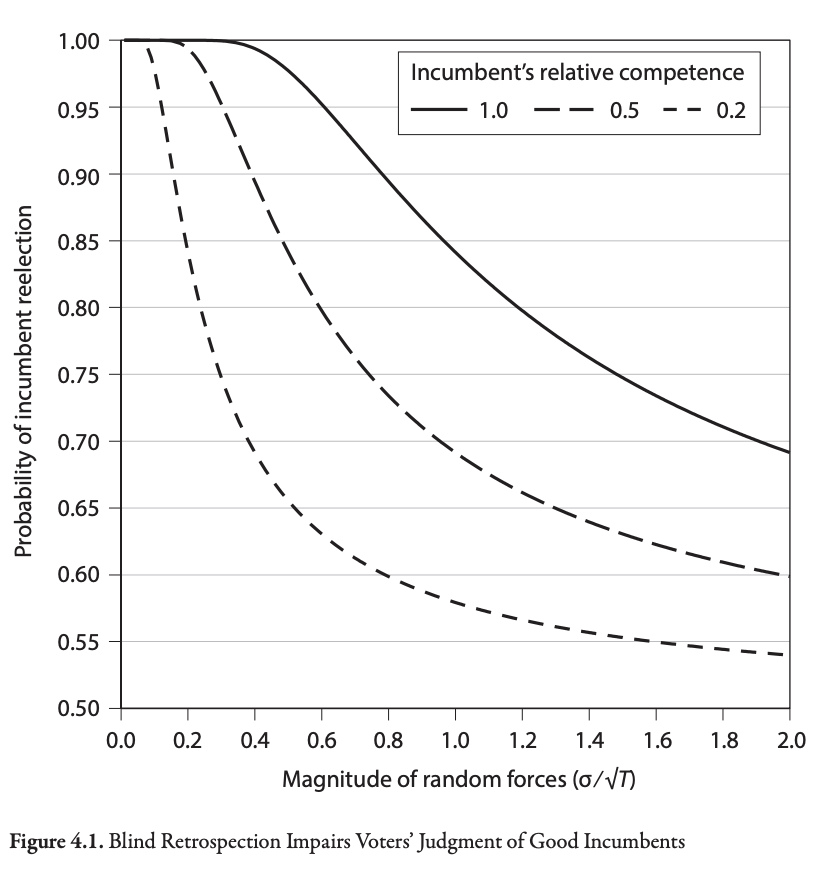
As the information environment becomes noisier, it becomes
Harder for voters to sanction ineffective leaders
Easier for leaders to shirk their duties
So what should people base their retrospective evaluations on?
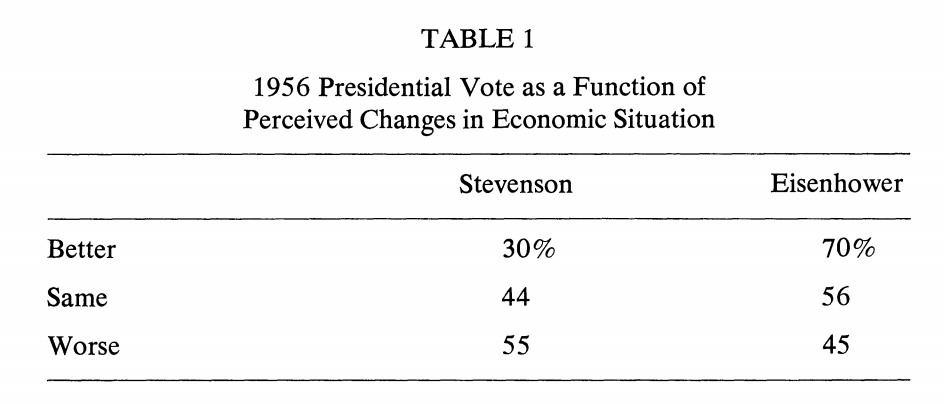
In order to ascertain whether the incumbents have performed poorly or well, citizens need only calculate the changes in their own welfare. (Fiorina 1981)

Broad consensus that economic factors matter, but lots of ongoing debates within the field of economic voting:
Macro vs Micro | Sociotropic vs Egocentric | National vs Pocketbook
Time horizons | Myopic voters
Negative vs positive shocks
Mechanisms and moderators
A&B’s critique boils down to two claims:
Take a moment to review the arguments in Chapter 5. Specifically:
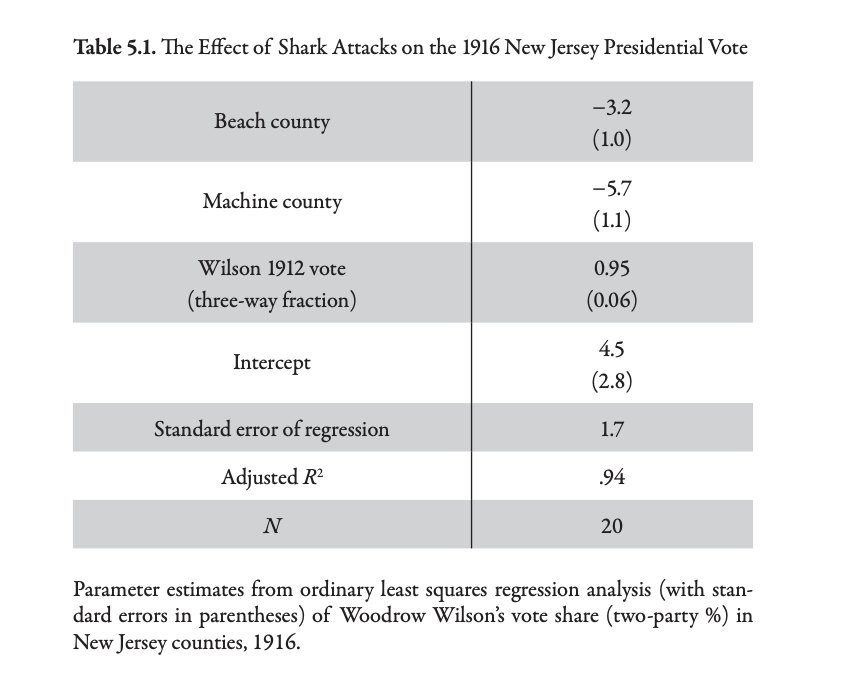
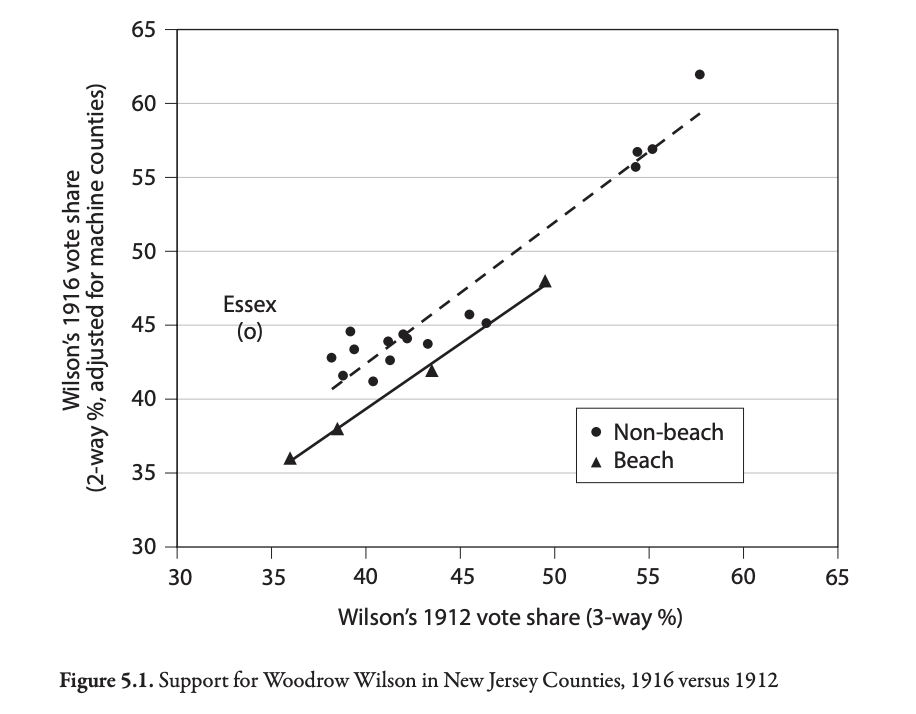
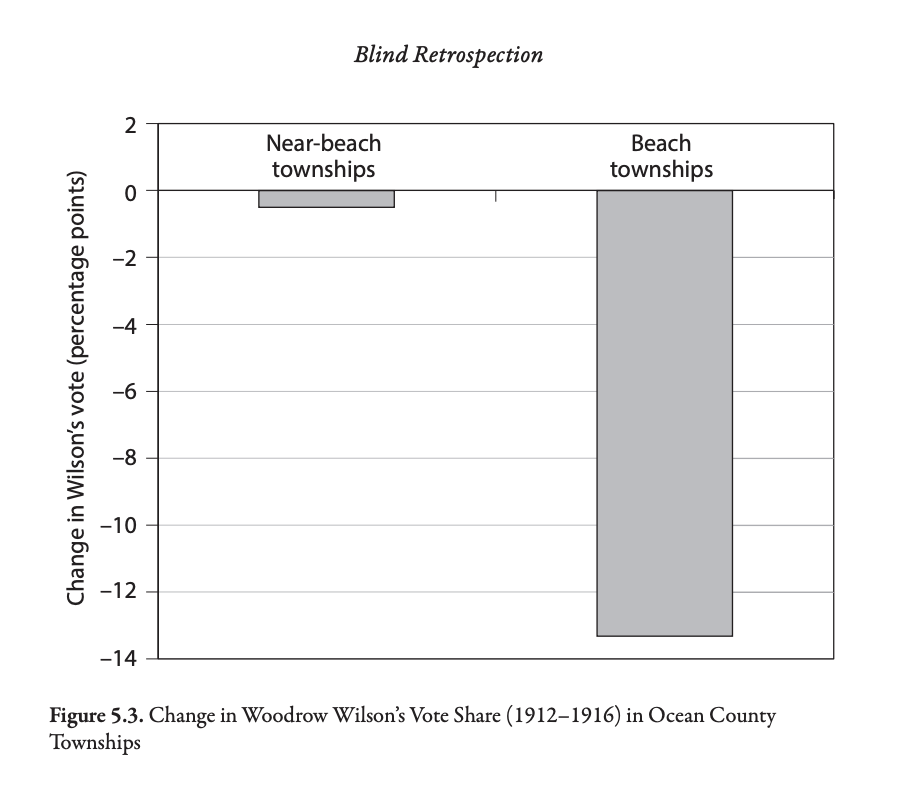
Table 5.1 and Figure 5.1 and 5.3
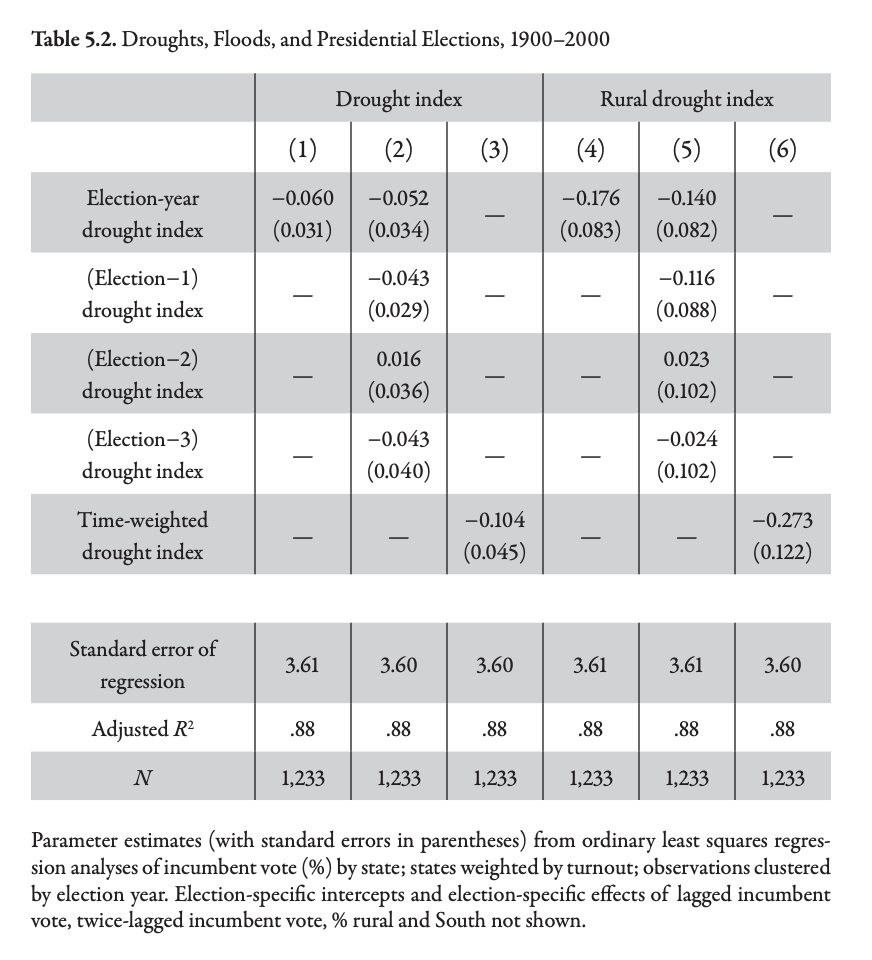
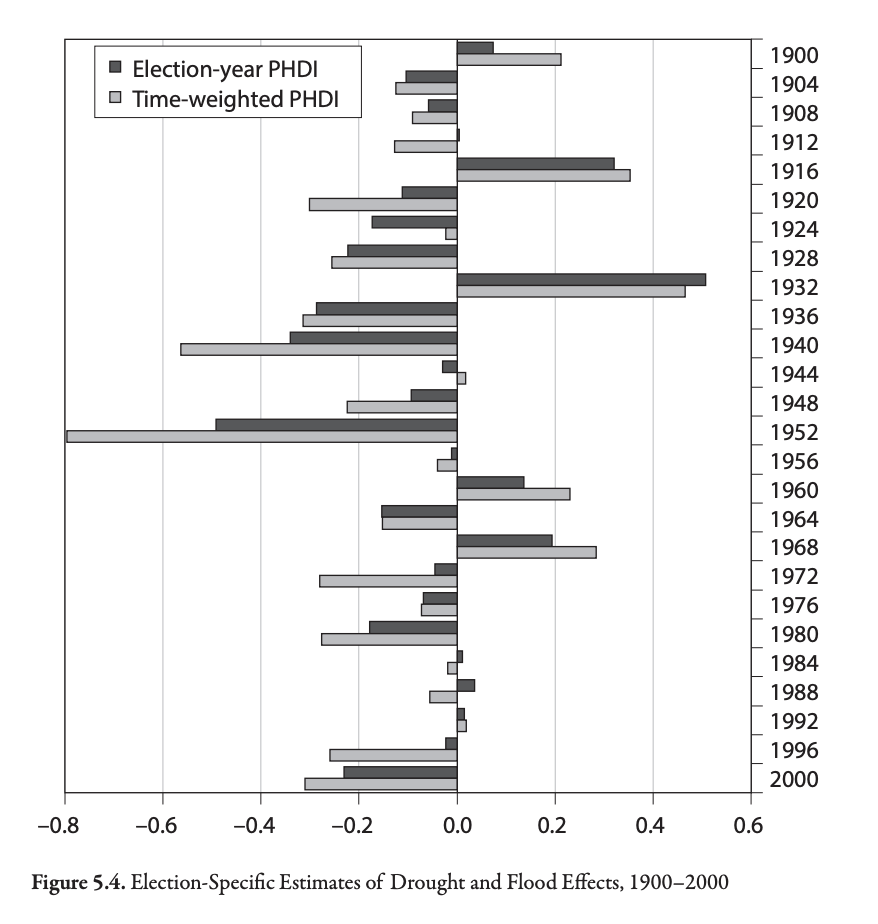
Table 5.2 and Figure 5.4
In Chapter 5, Achen and Bartels present evidence that voters enage in blind retrospection, punishing elected officials for events outside of their control.
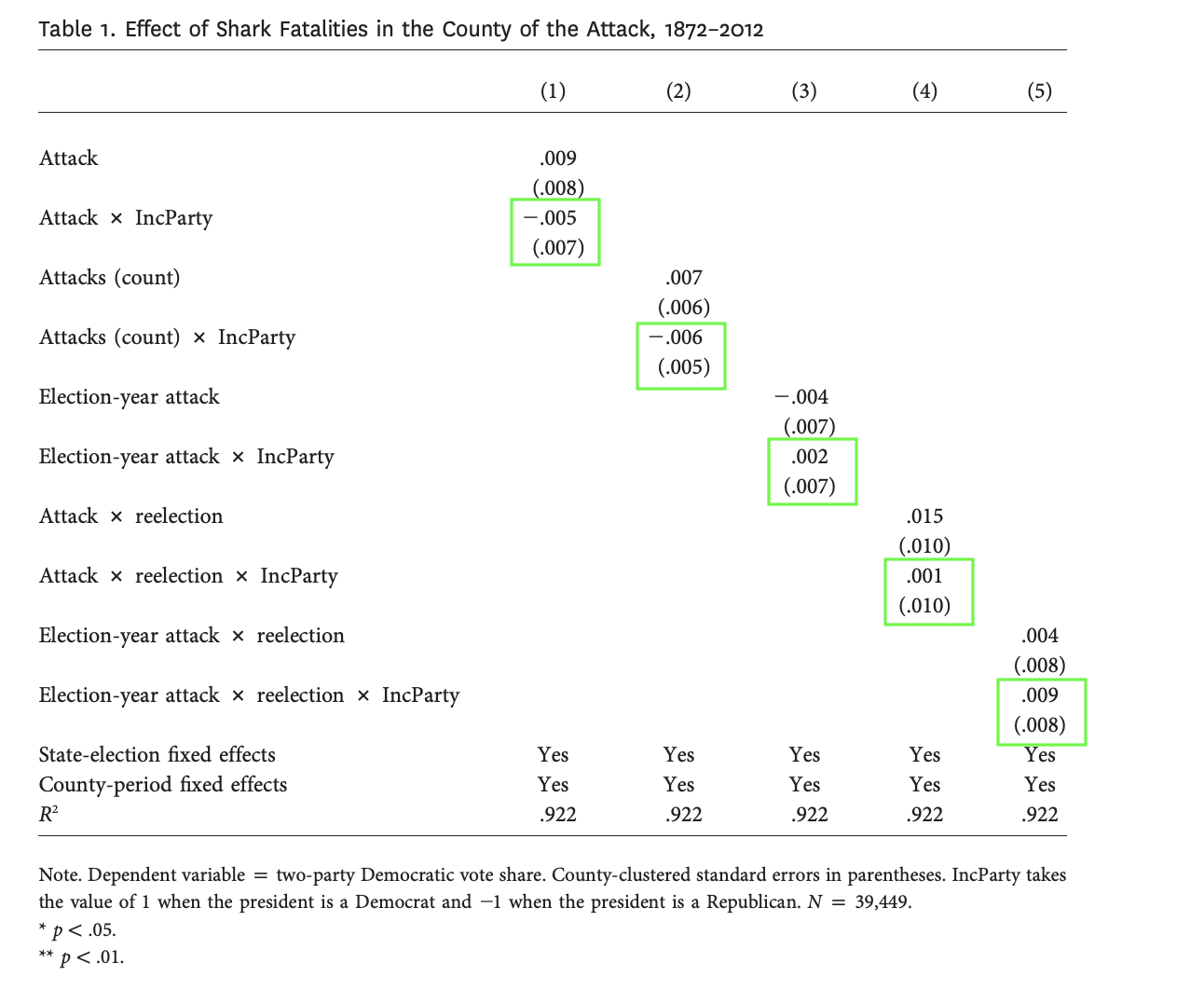
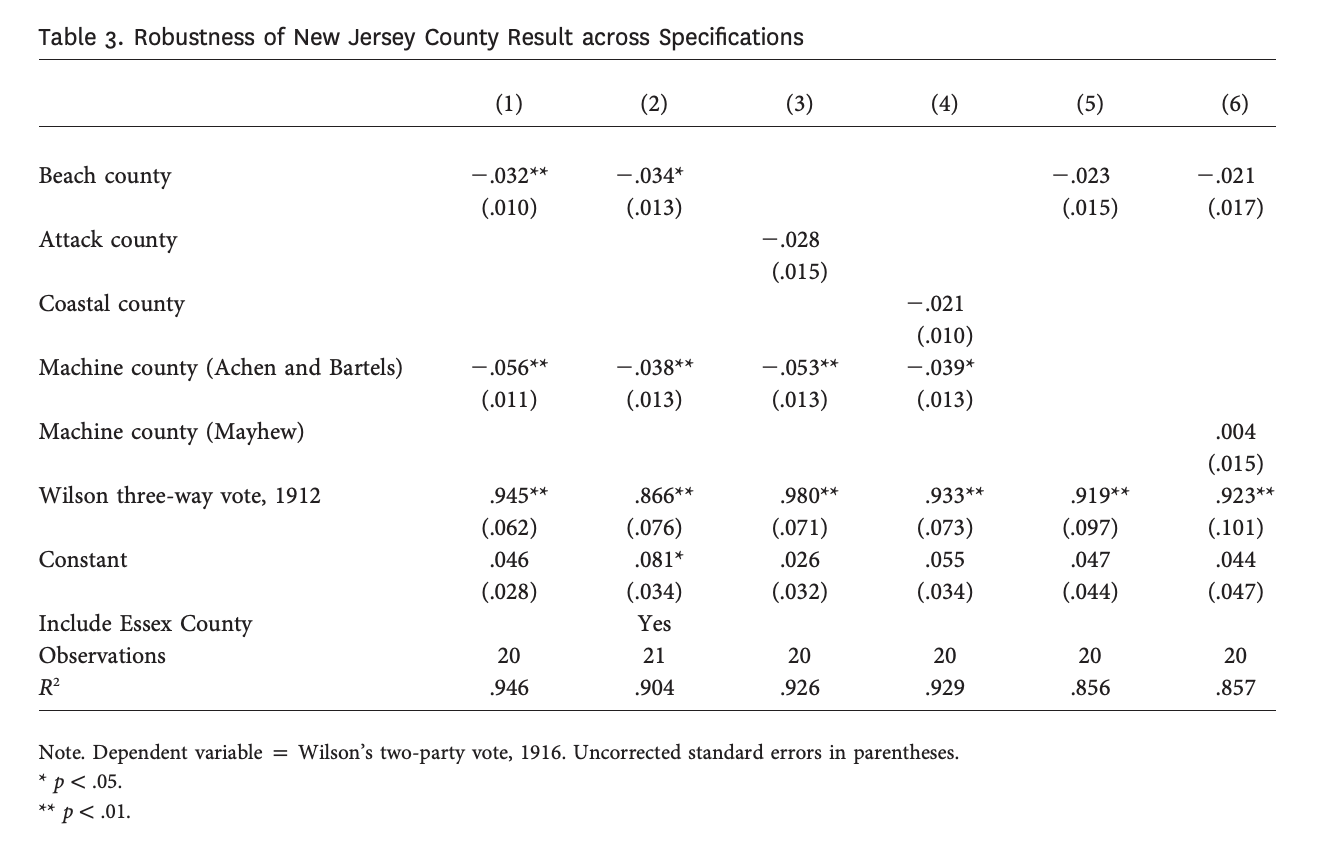
They show that Woodrow Wilson’s vote totals in 1916 appear to be lower in beach counties during a summer when shark attacks in New Jersey were particularly salient
They suggest this phenomena is more general, by showing how extreme weather (droughts and floods) negatively impacts incumbent vote share.
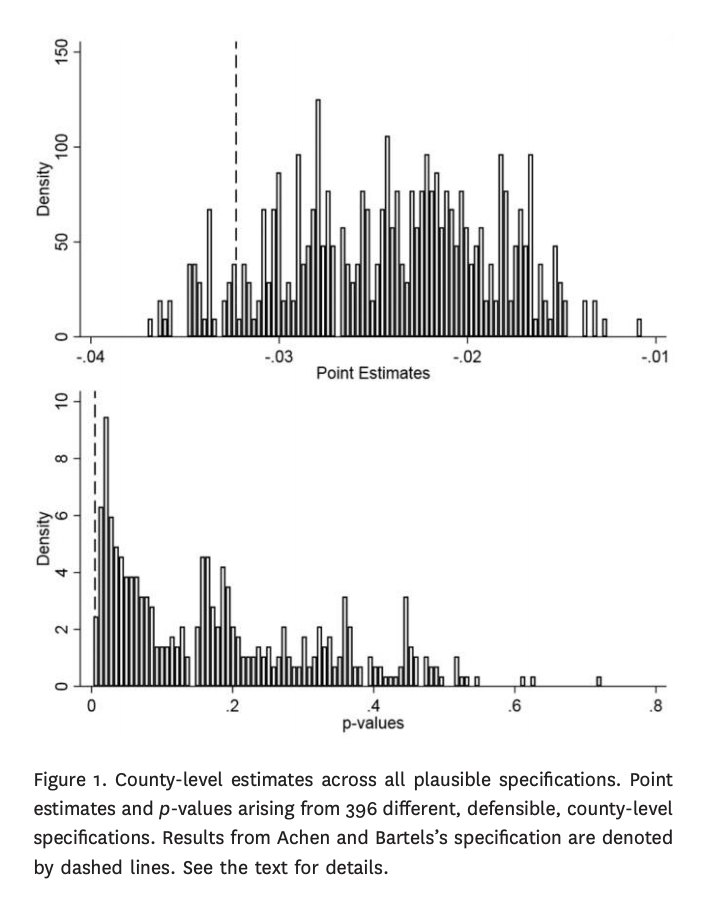
But how robust are these results?
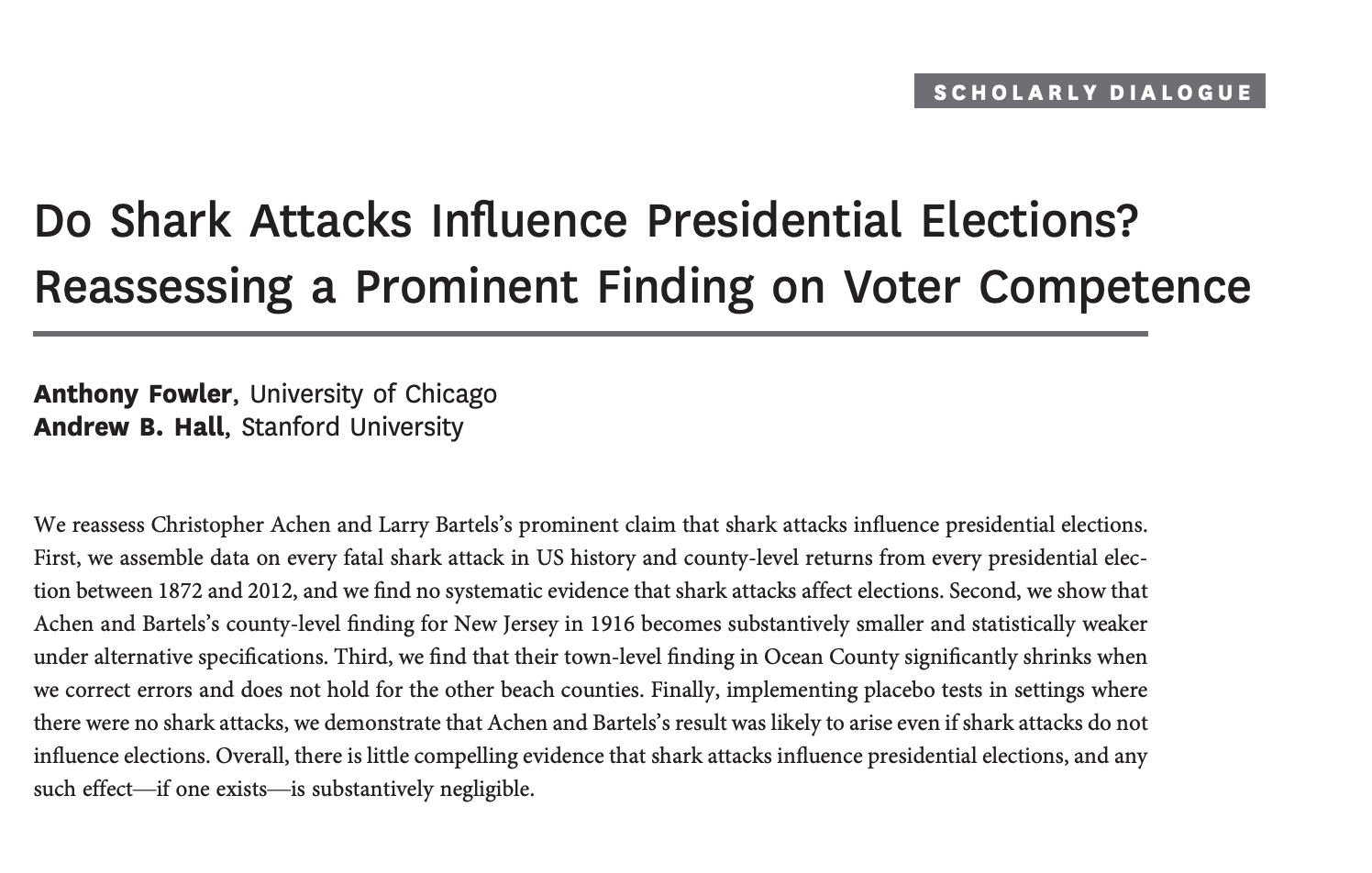
The shark attack example is flashy and surprising
Fowler and Hall (2018) offer compelling critiques of this particular finding
But still others find evidence of irrelevant events influencing electoral behavior:
What can we conclude?
If voters are rational retrospective evaluators, we should observe:
Long time horizons (running tally)
Effects tied to actual executive responsibility (No shark attacks/droughts)
Strong relationship between performance and re-election
If A&B are right, we should observe:
Myopia (only recent quarters matter)
Weak relationship between performance and competence
Effects consistent with manipulation
Now let’s walk through some of the evidence.
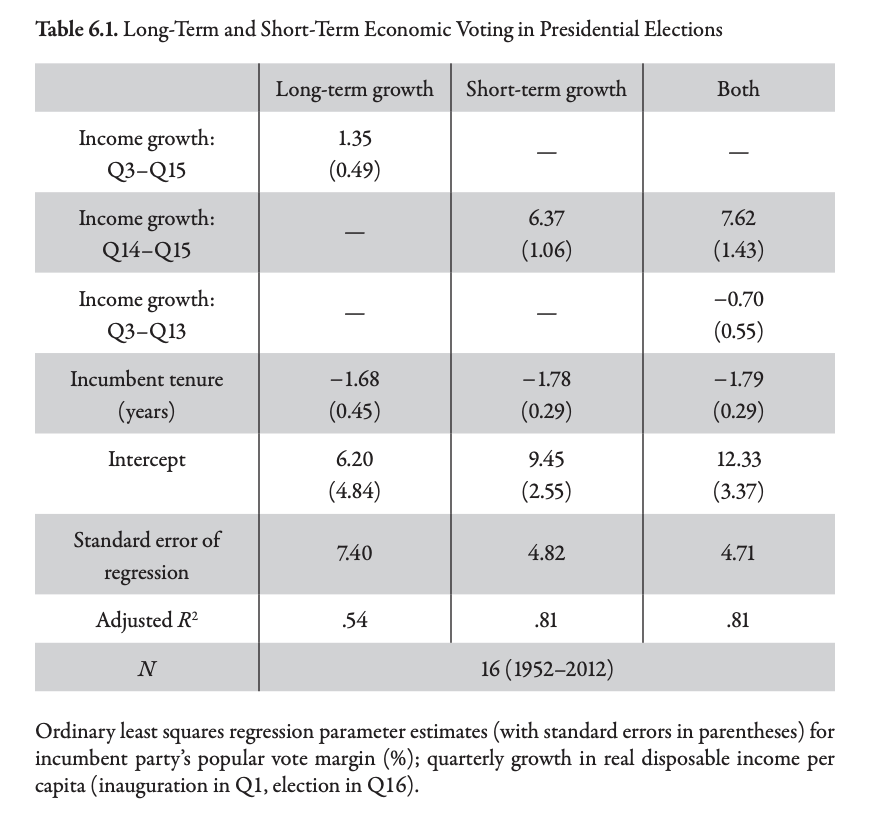
What Is Being Estimated?
Dependent variable: Incumbent vote share
Key predictors: Quarterly economic growth
Question: Do voters respond to the full term… or just the last year?
If voters use a “running tally”:
If voters are myopic: only the final year (or final quarters) should matter
## Interpretation
Which quarters have statistically significant effects?
How large are the effects?
Do early-term economic shocks matter?
Key takeaway:
Only growth in the last year meaningfully predicts incumbent vote share.
Voters appear to overweight recent economic conditions.
That creates incentives for short-term manipulation.
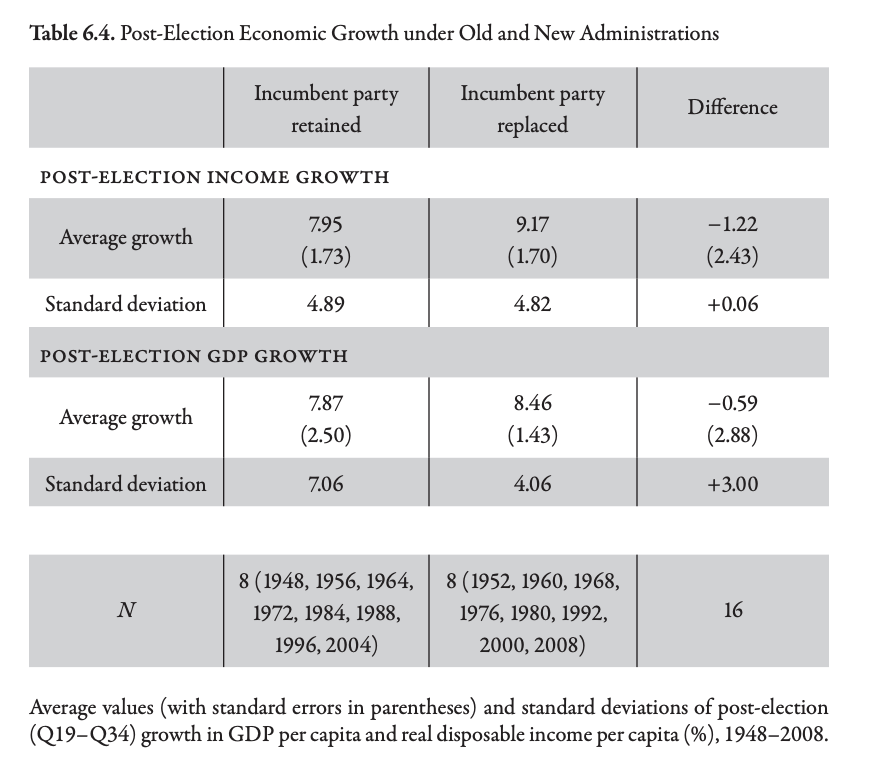
If voters select competent leaders:
Strong economic performance under Party A
If voters do poorly at selection:
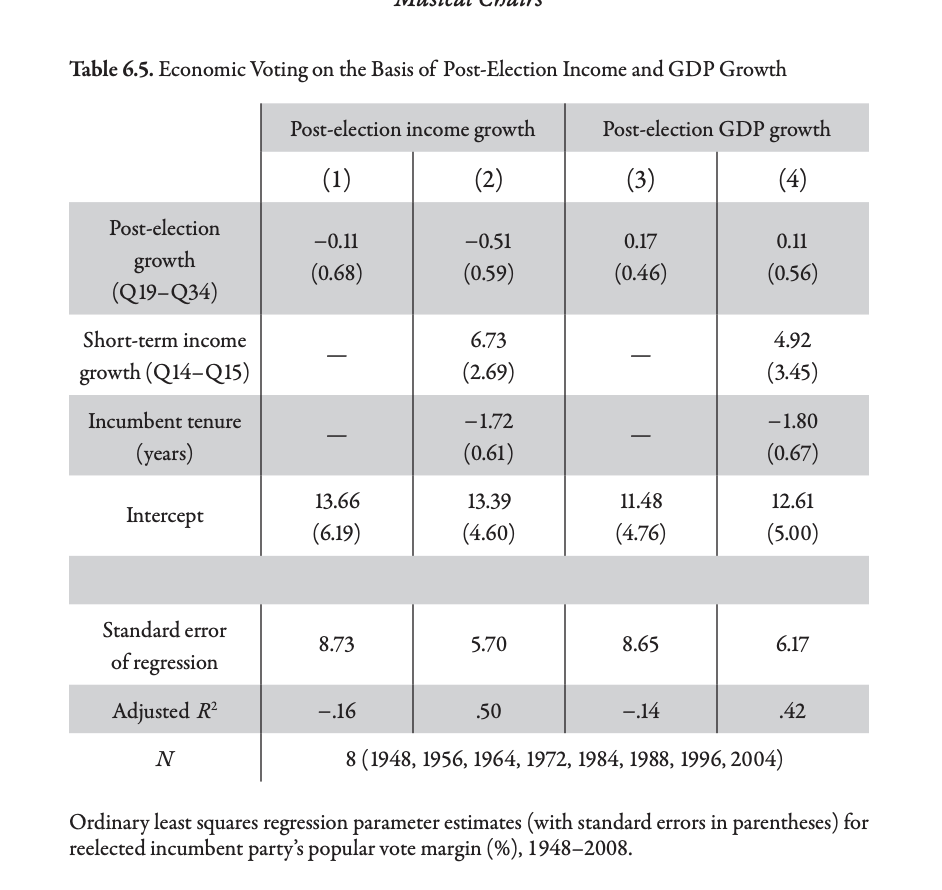
Re-electing incumbents does not reliably improve economic outcomes (Table 6.4 & 6.5)
Implication:
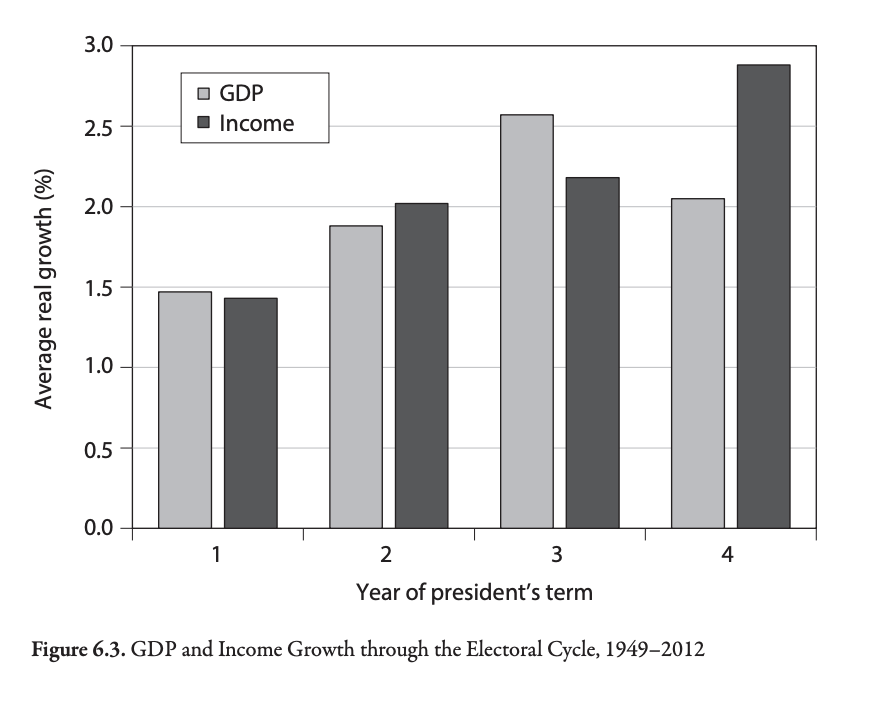
If incumbents can stimulate the economy before elections we should observe:
Economic growth spikes before elections
Weak growth afterward
This creates:
A moral hazard problem
Incentives for short-term economic distortion
## Poltical Business Cycle:
Economic growth appears to increase before elections.
Suggests potential electoral timing.
If voters focus heavily on recent growth, incumbents may game the system.
Democratic accountability becomes vulnerable to short-term engineering.
Theories of Retrospective Voting seek to offer an alternative account of democratic accountability that more realistically reflects the abilities of average citizens
Rather than assuming coherent beliefs, complete knowledge, RV asks citizens to select good leaders and sanction bad leaders using assessments of their welfare as indicator of competence
Critics of RV contend that retrospective evaluations are:
Populist Folk Theory - Voters hold coherent policy preferences - Elections aggregate those preferences
Rational Retrospective Theory - Voters evaluate performance - Elections reward competence
Achen & Bartels argue:
If that’s true, we should observe:
Social identities are going to play a significant role in A&B’s realist theory of democracy
Social identity is a person’s sense of who they are based on their group membership
Now cross off the least important identity.
Now cross off the next least important identity…
If identity drives politics, we should observe:
Chapter 9 presents evidence of the important of “identities” to understanding political behavior using three types of evidence:
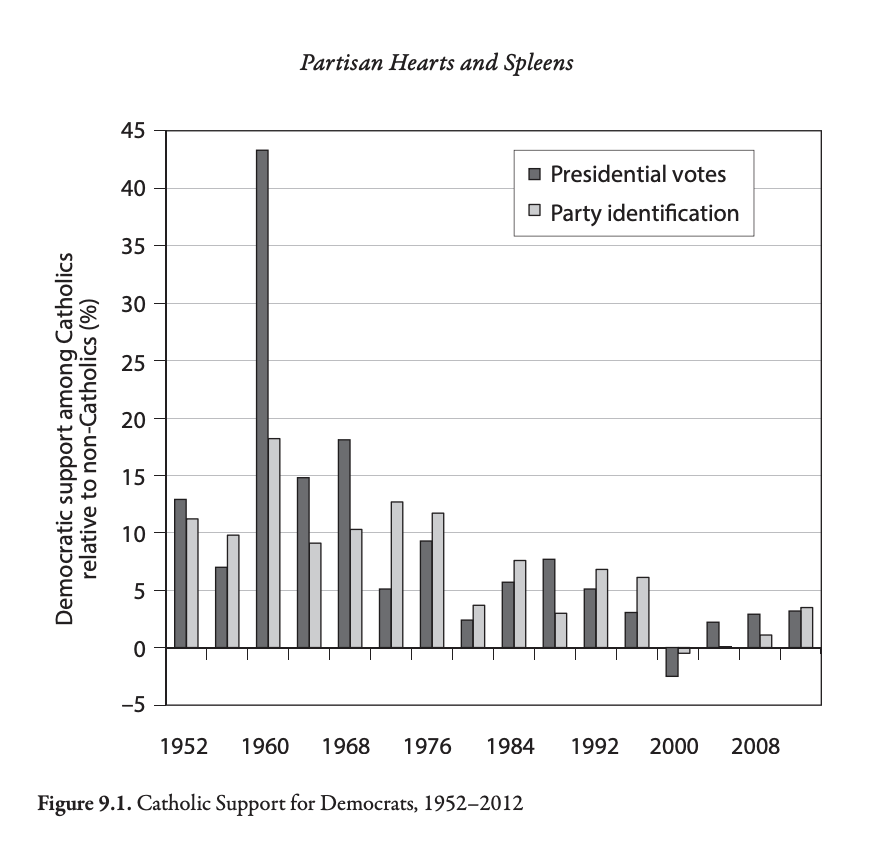
Historical analysis of Catholic voting behavior
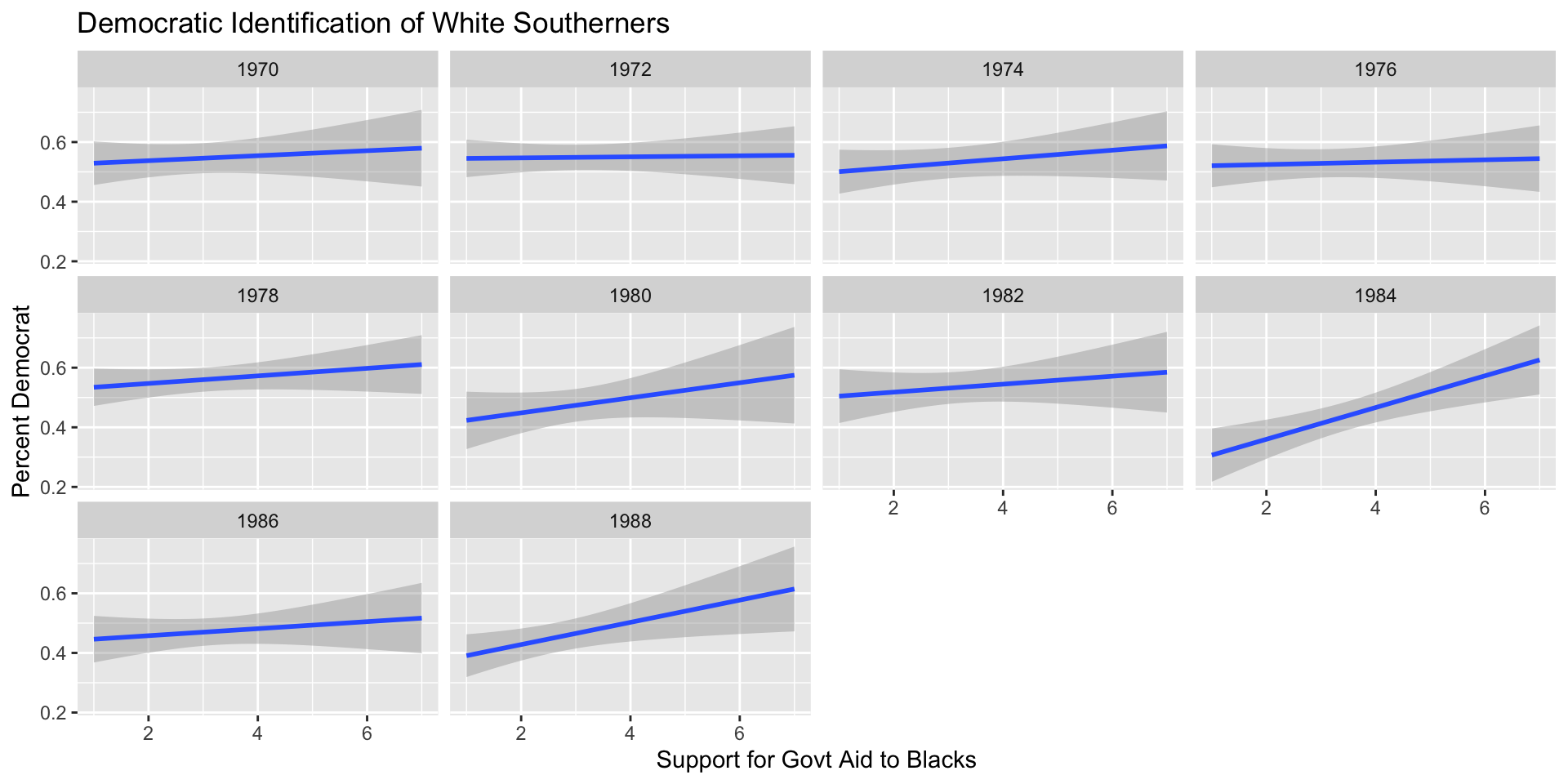
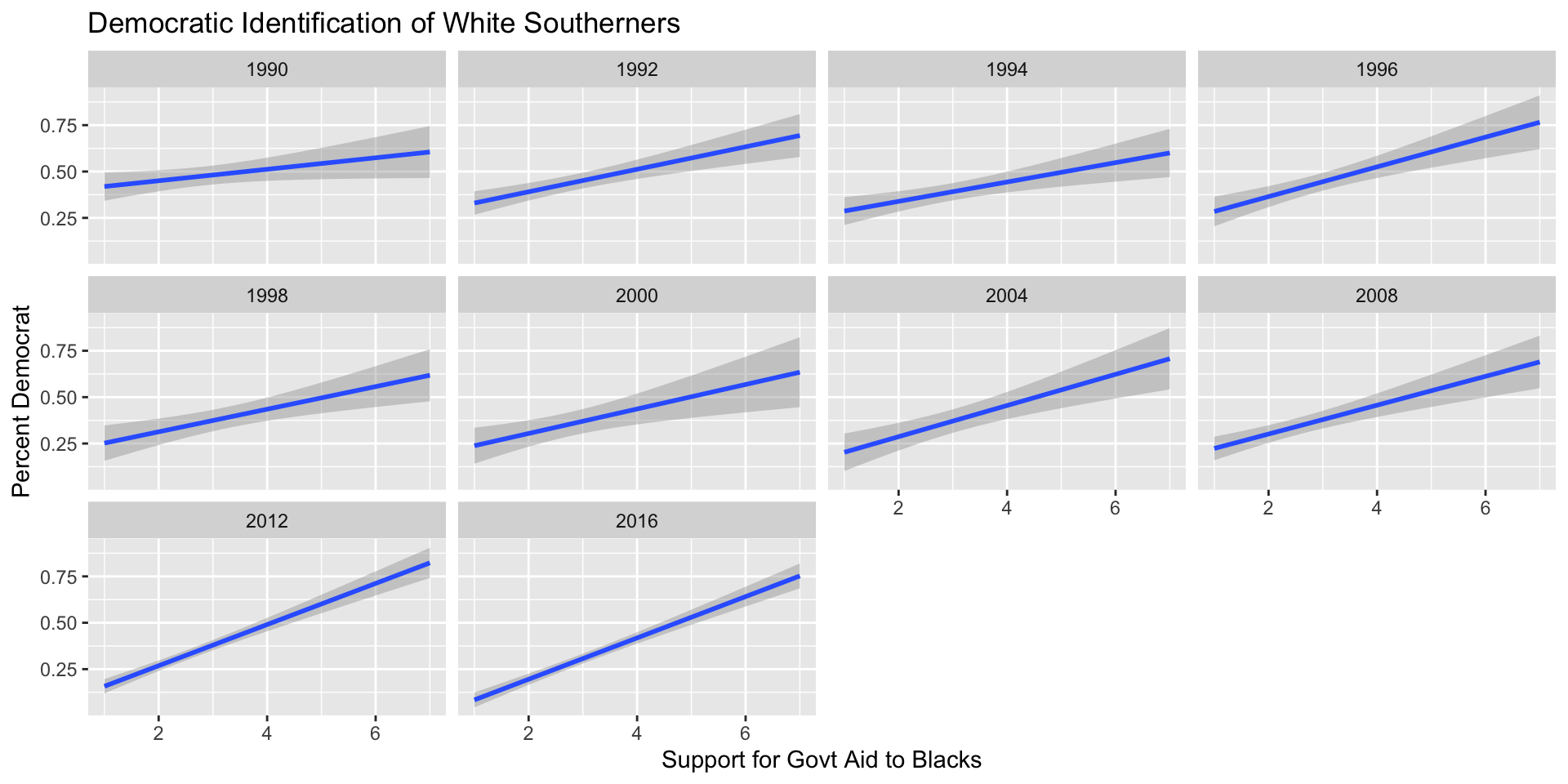
Time series cross sectional survey analysis of the partisan identity and policy beliefs of White Southerners
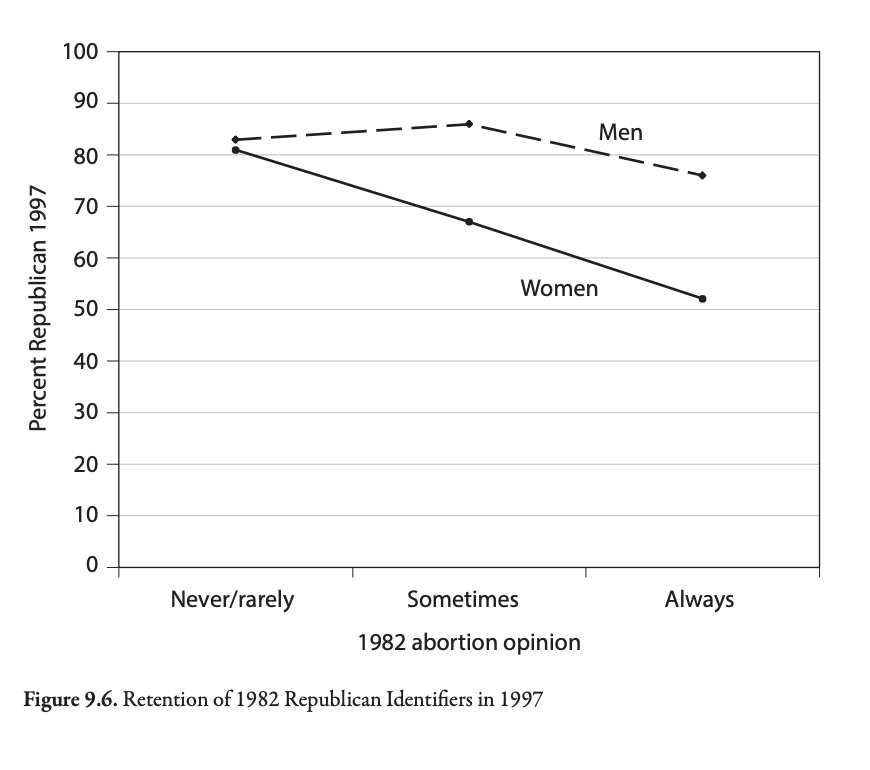
Panel survey analysis of abortion attitudes and partisanship
If policy preferences dominate:
If identity matters:
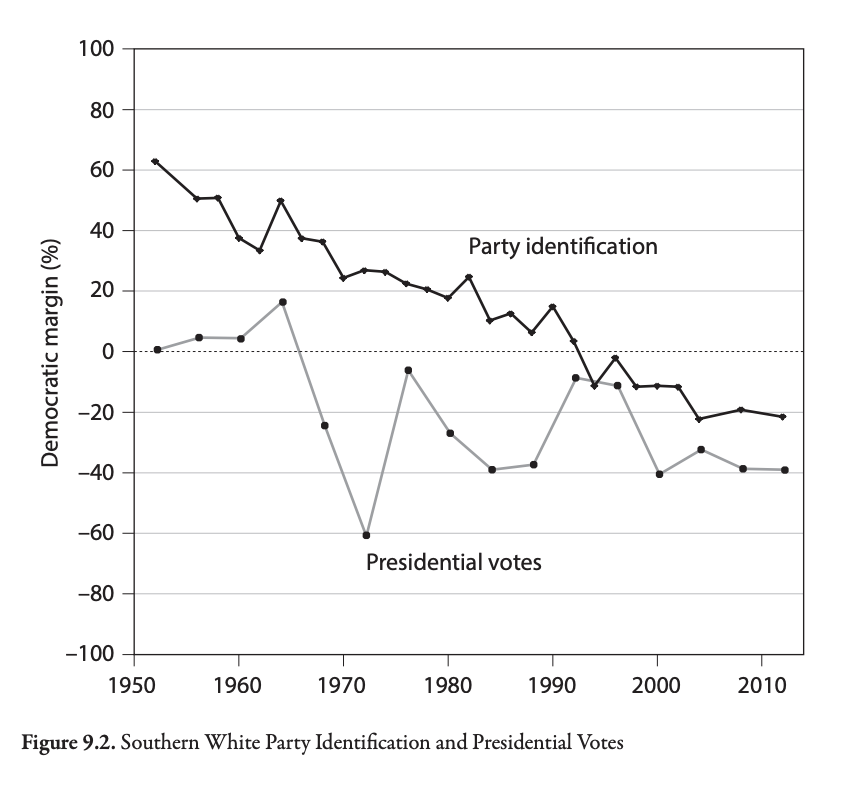
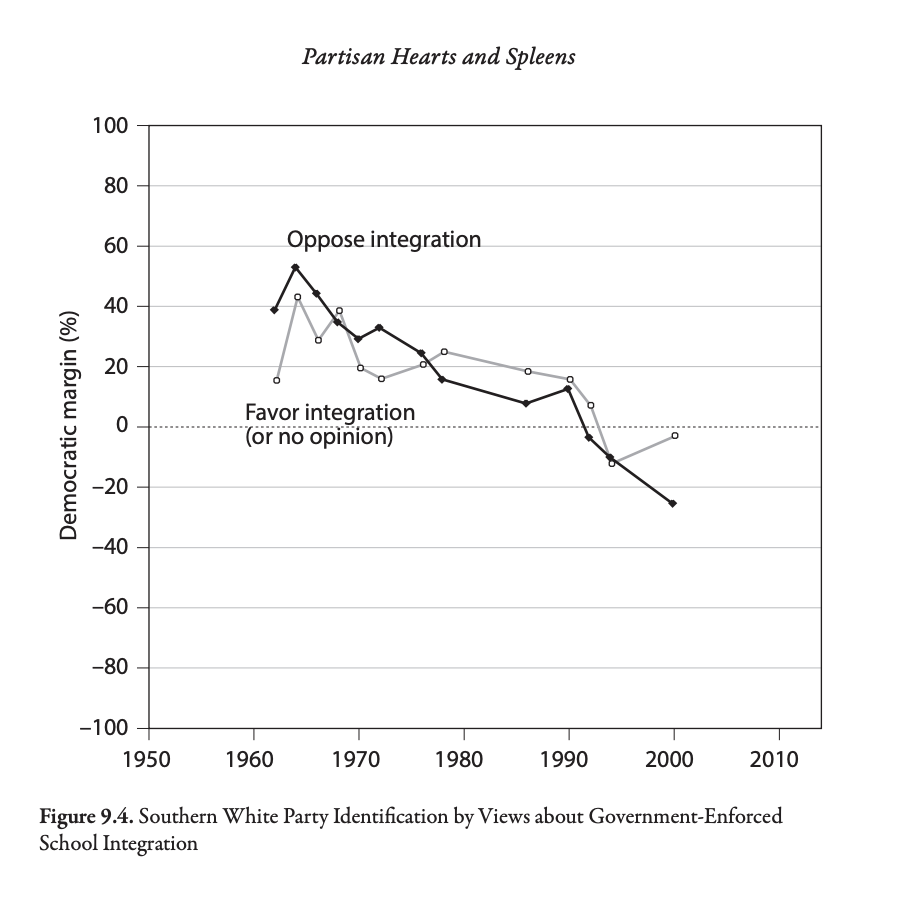
Achen and Bartels present an alternative interpretation of realignment in the south emphasizing the role of social identities over standard accounts that emphasized partisan policies using the following evidence:
Analyzing trends in PID and Voting overtime (Fig 9.1) and by age cohort (Fig 9.2)
Analyzing trends in PID by policy position (Fig 9.4, 9.5)
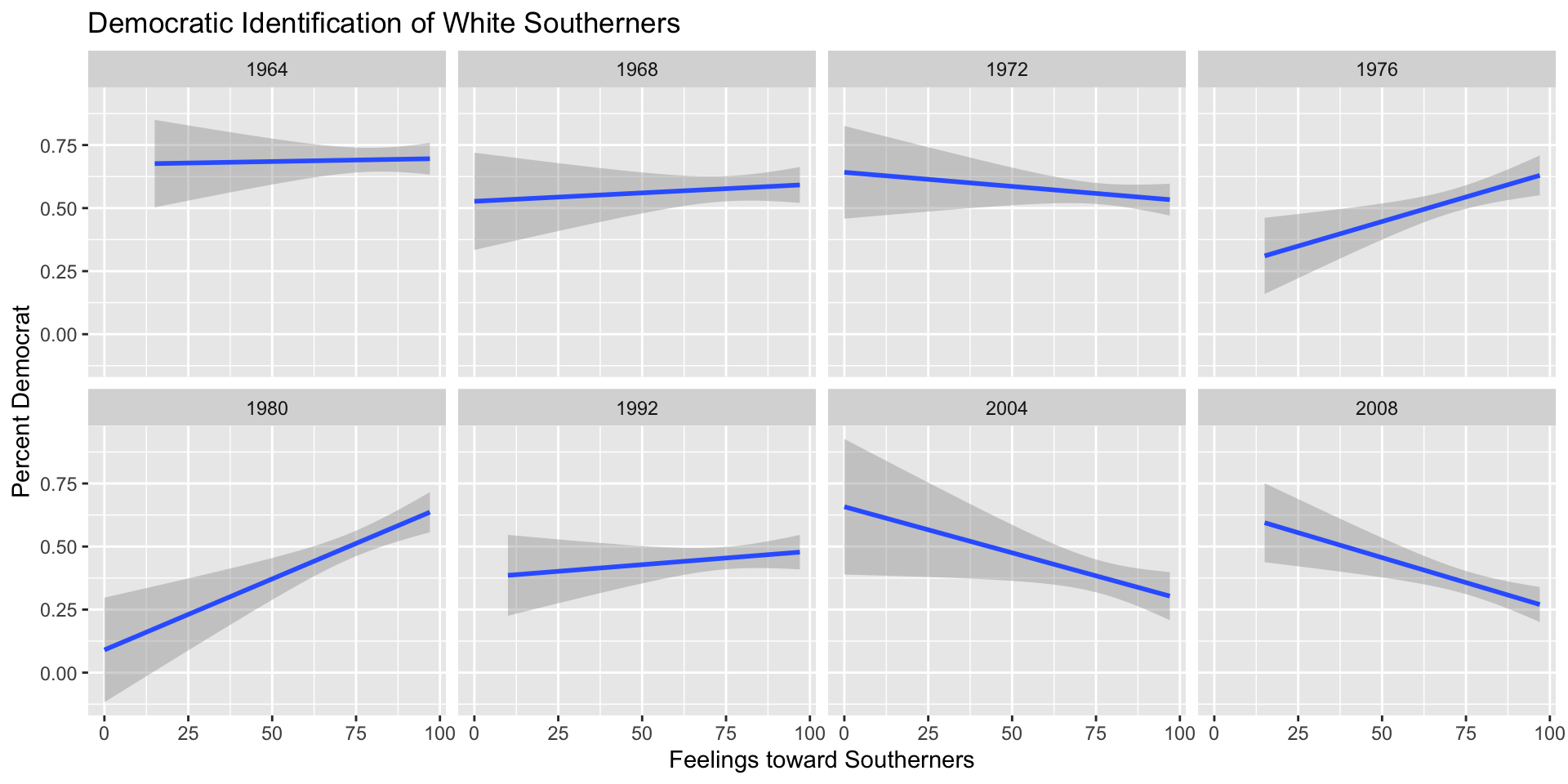
Regression analysis predicting PID with feelings toward Southerners over time (Table 9.1)
Standard Account: - Policy evolution (especially race) drove partisan change.
Achen & Bartels’ Claim: - Social identity as “Southerner” reshaped partisan attachments. - Voting moved first. - Party identification adjusted more slowly.
Achen and Bartels present an alternative interpretation of realignment in the south emphasizing the role of social identities over standard accounts that emphasized partisan policies using the following evidence:
Analyzing trends in PID and Voting overtime (Fig 9.1) and by age cohort (Fig 9.2)
Analyzing trends in PID by policy position (Fig 9.4, 9.5)
Regression analysis predicting PID with feelings toward Southerners over time (Table 9.1)
We would expect:
What would issue evolution predict?
What Is Being Estimated?
Dependent variable: - Democratic identification among White Southerners
Key predictor: - Feelings toward “Southerners”
Question: Does warmth toward the in-group predict partisanship?
The results indicate that the Democratic partisan advantage in 1964 among white southerners who expressed neutral attitudes toward “southerners” was almost 25 percentage points, while the corresponding advantage among those who expressed very warm feelings toward “southerners” was more than twice as large, almost 55 percentage points
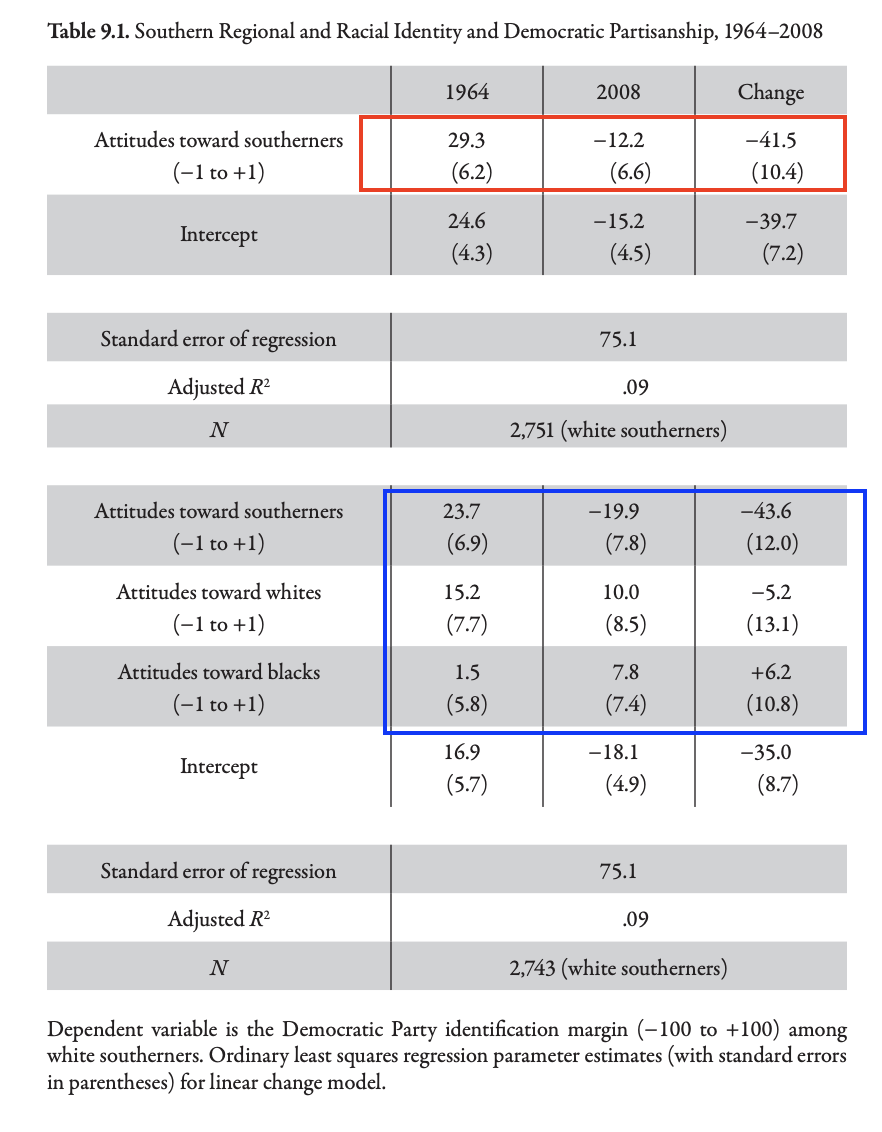


Was southern identity really the basis of these very different responses to the political events of the long southern realignment era?

I find the model(s) in Table 9.1 a little confusing.
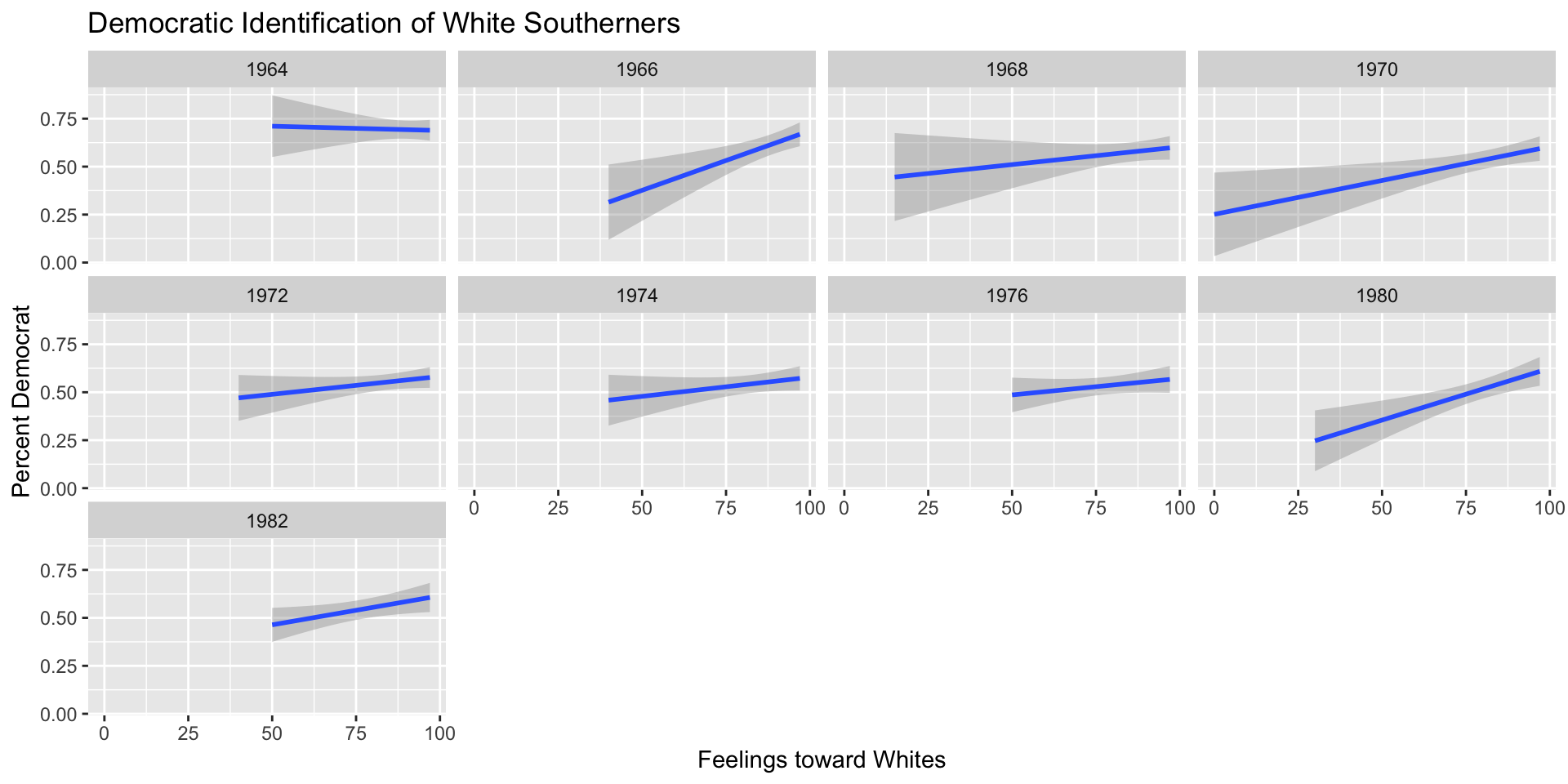
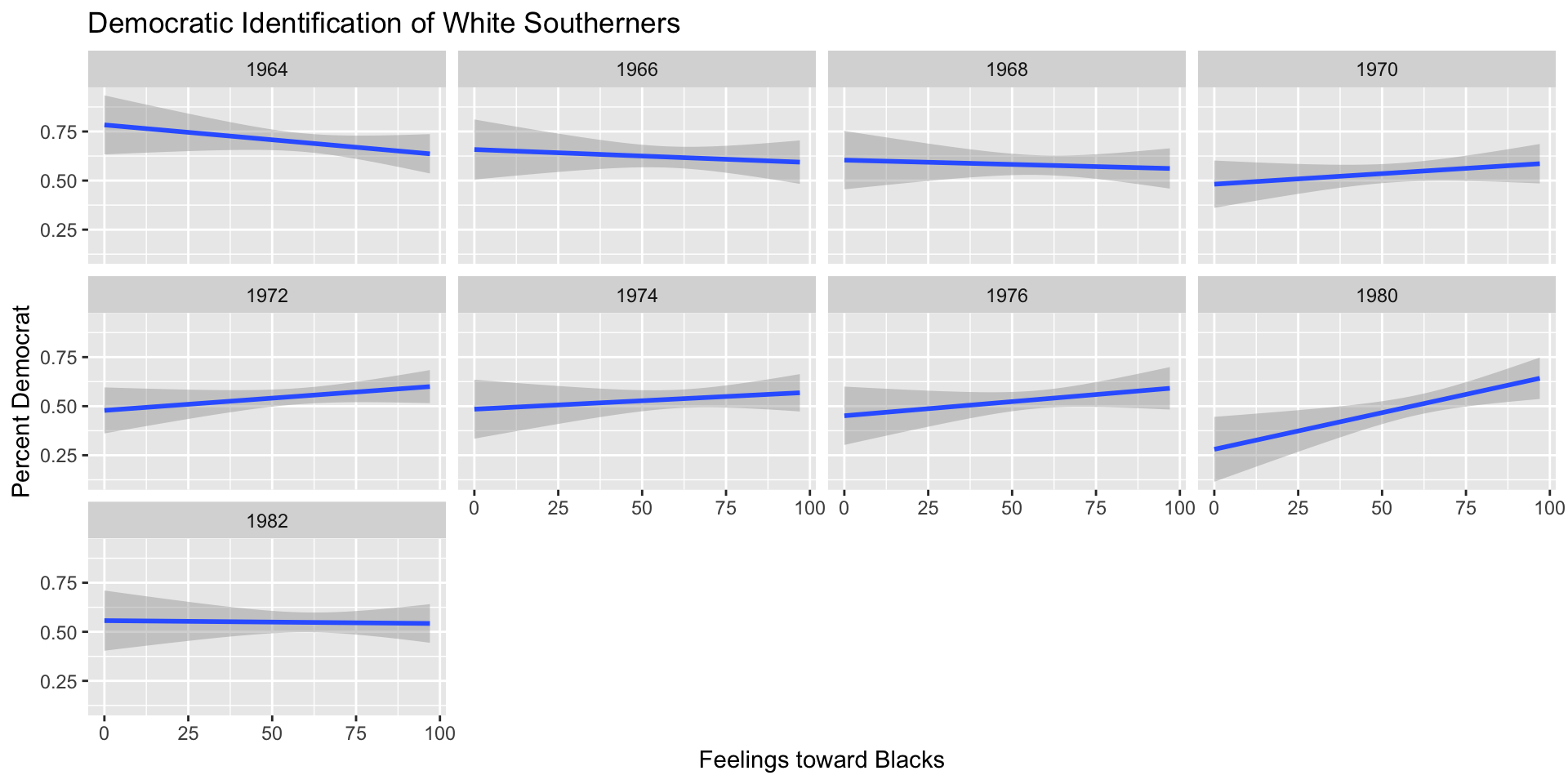
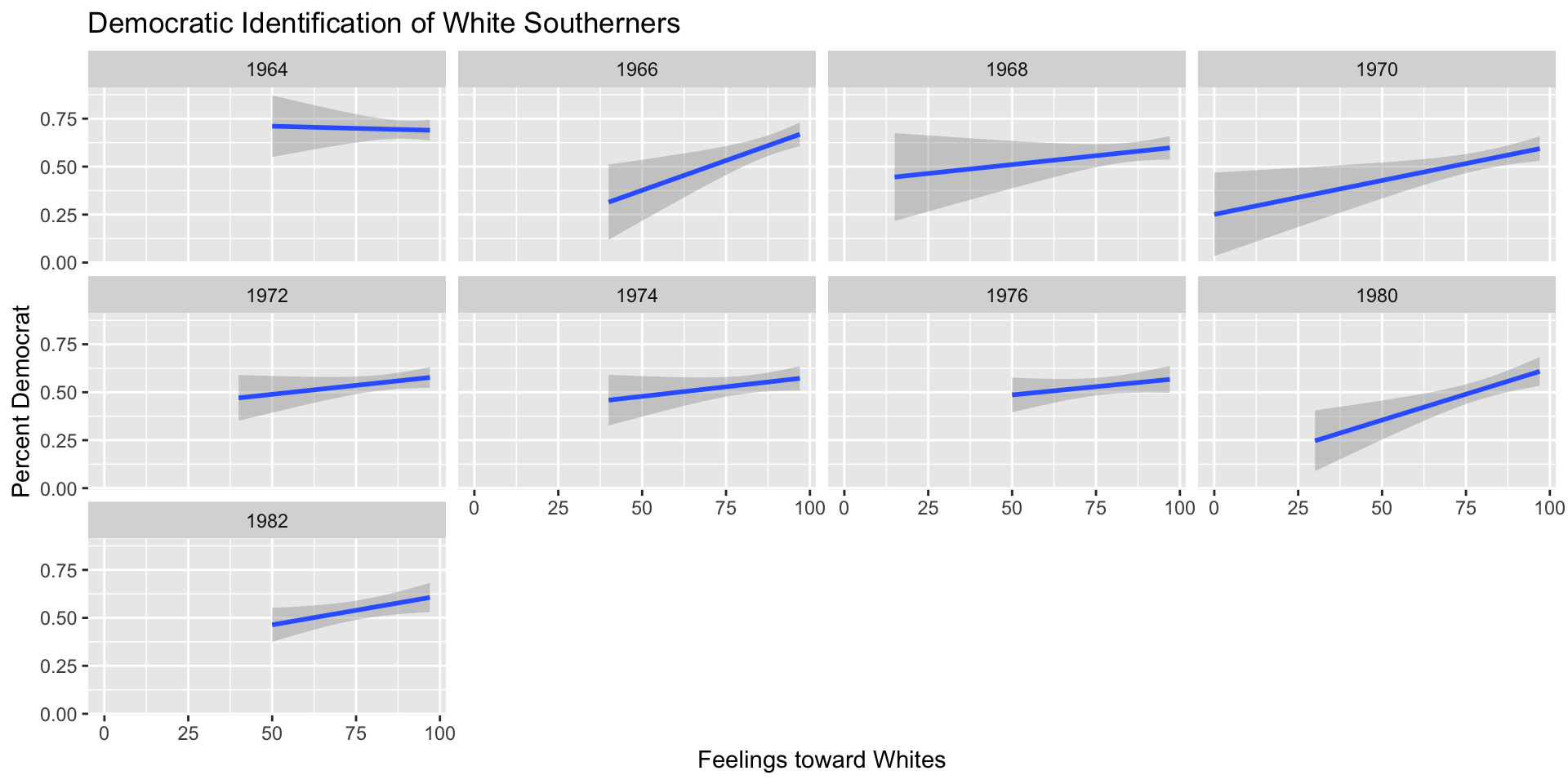
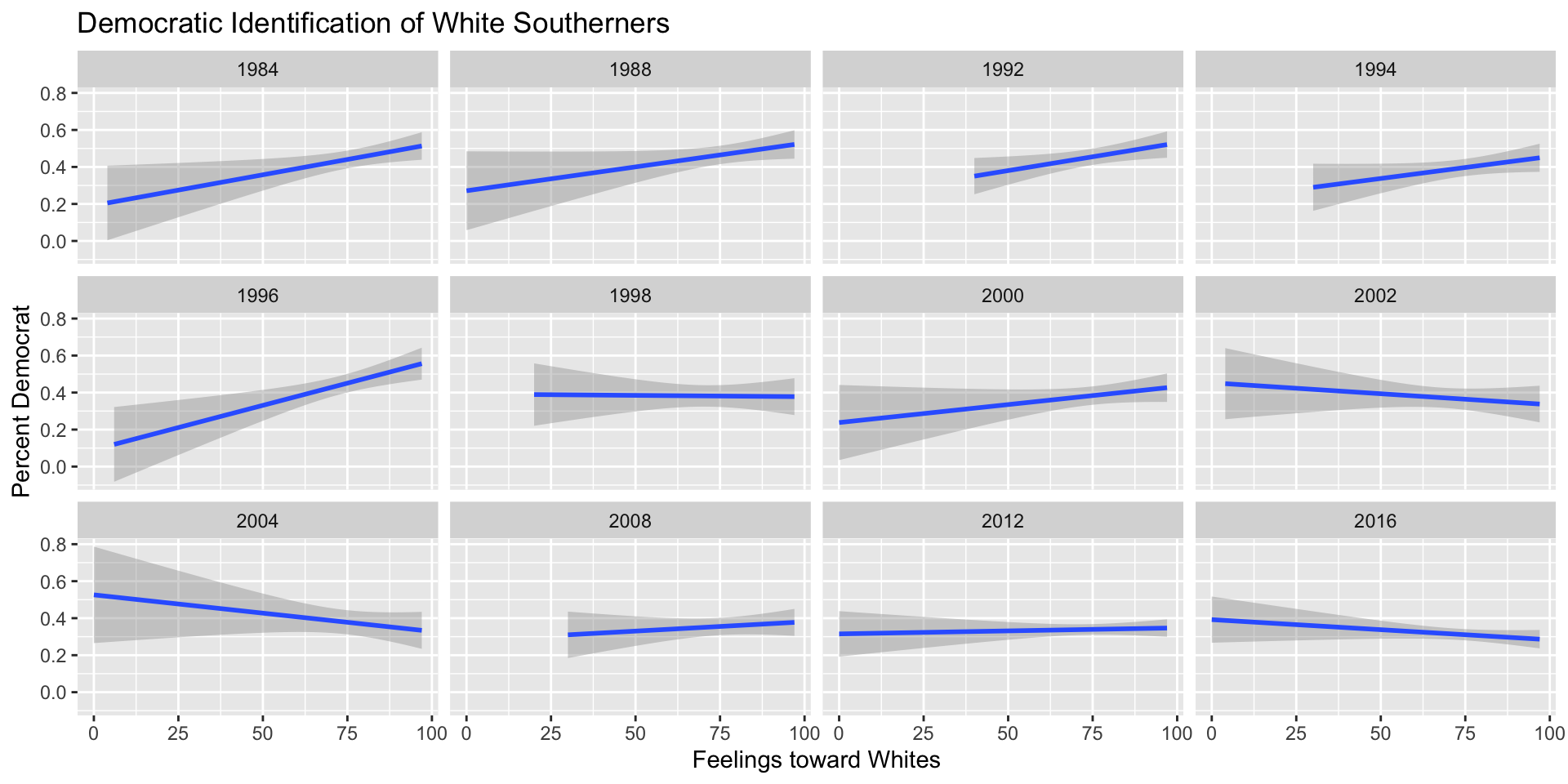
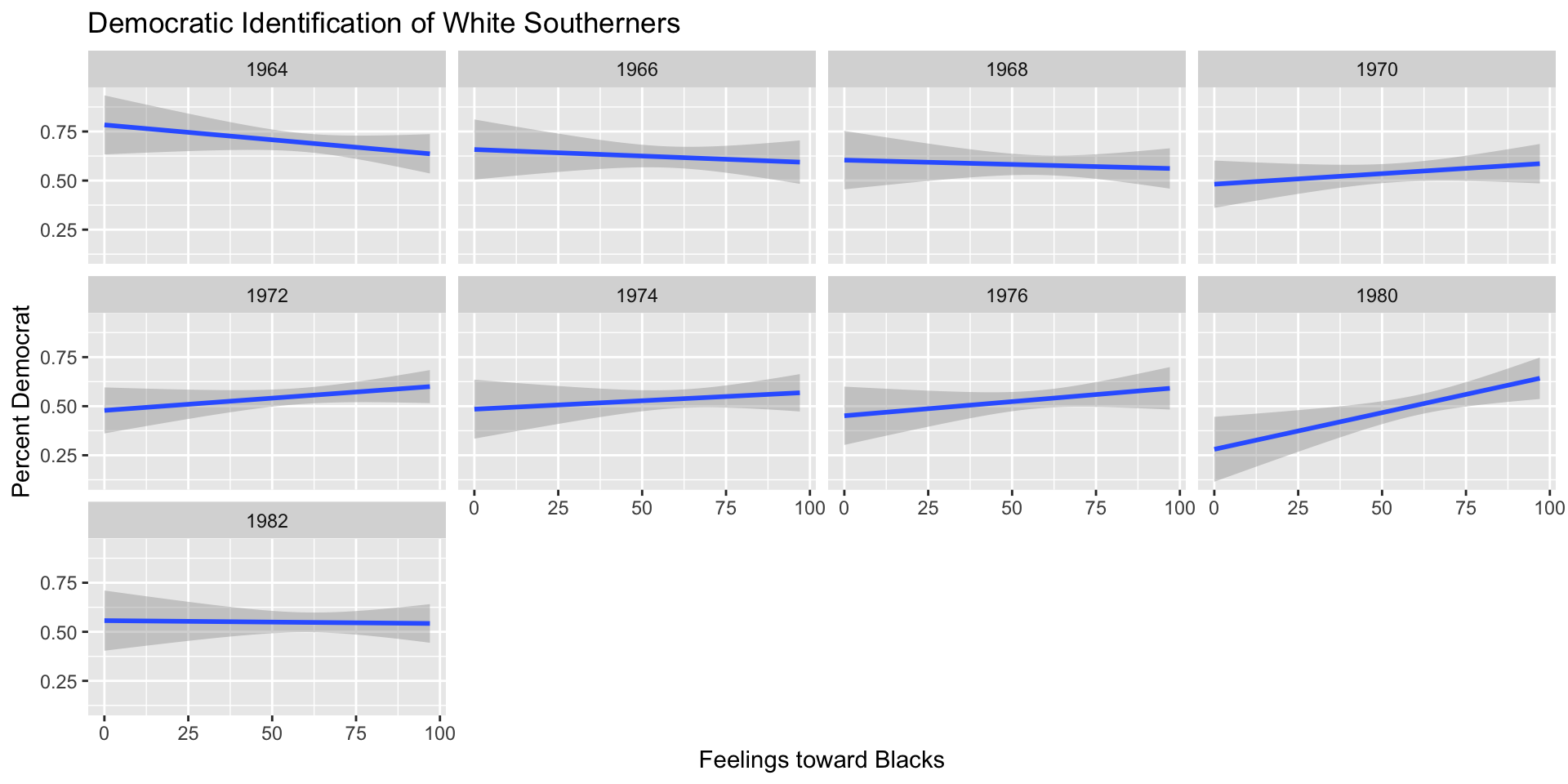
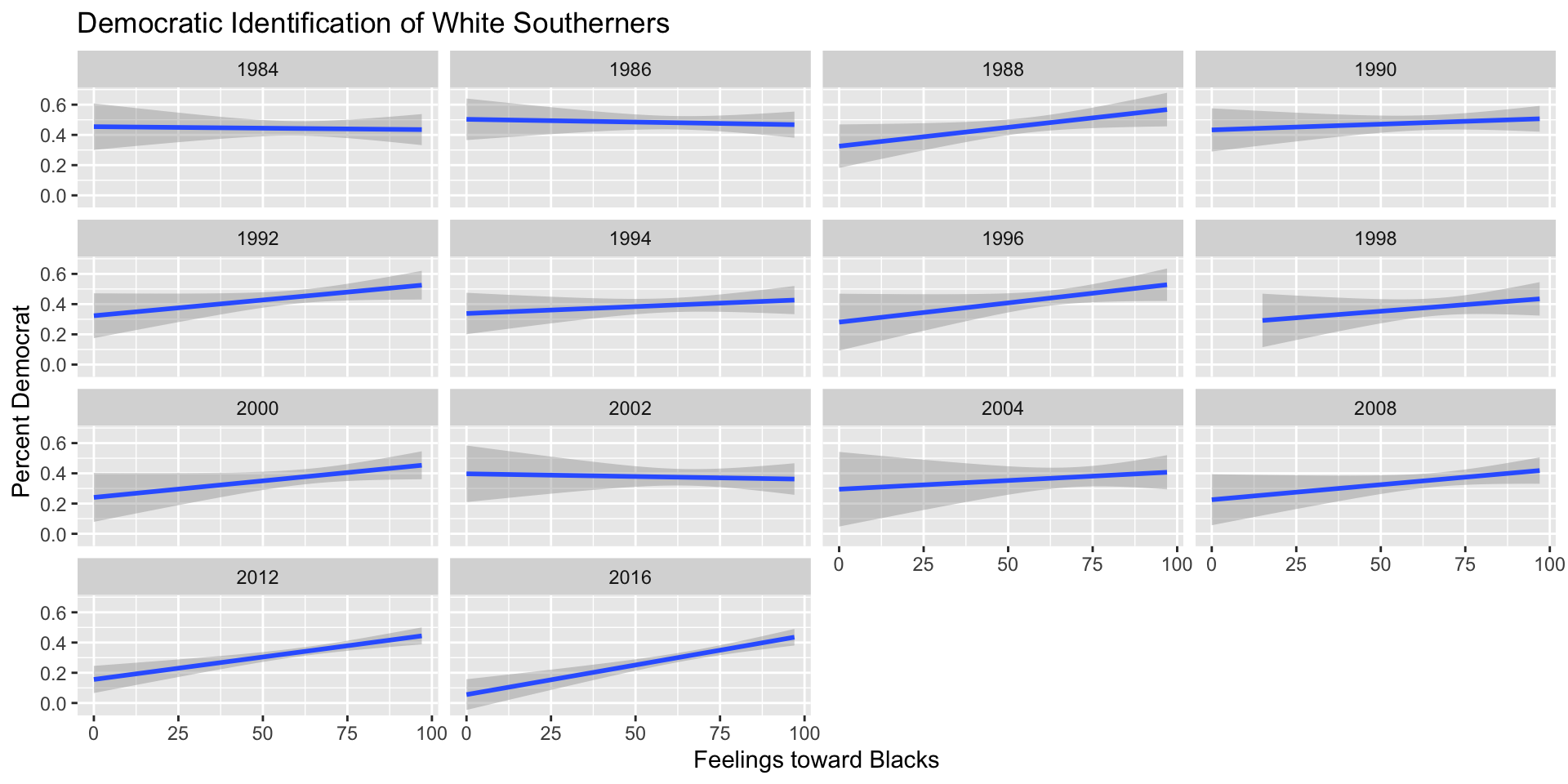
In the following tabs, I’ve plot some linear trends in Democratic Identification by year for:


This suggests that:
The regression interpretation requires modeling assumptions and selective emphasis.
The identity story is plausible – but it is not obvious in the raw data.
Two possibilities:
Panel data allow us to test these claims (and test them separately for men and women)
Two conditioning exercises:
Among 1982 Republicans: Does abortion position predict party defection?
Among 1982 pro-life citizens: Does party predict abortion conversion?
Key result:
Interpretation:
The identity that is more central (gender for women, party for men) is less likely to move.
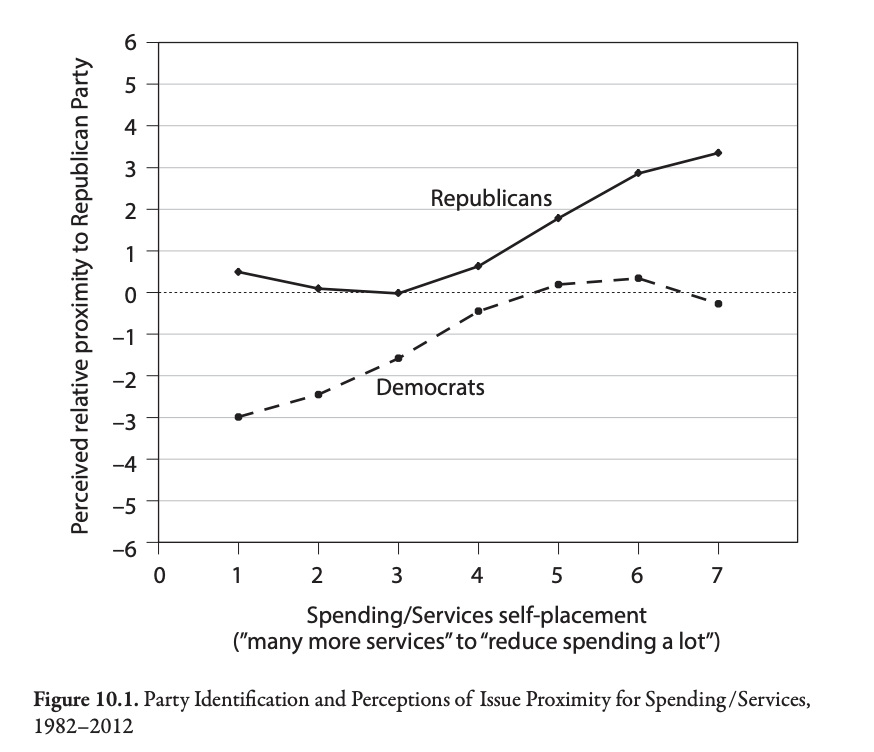
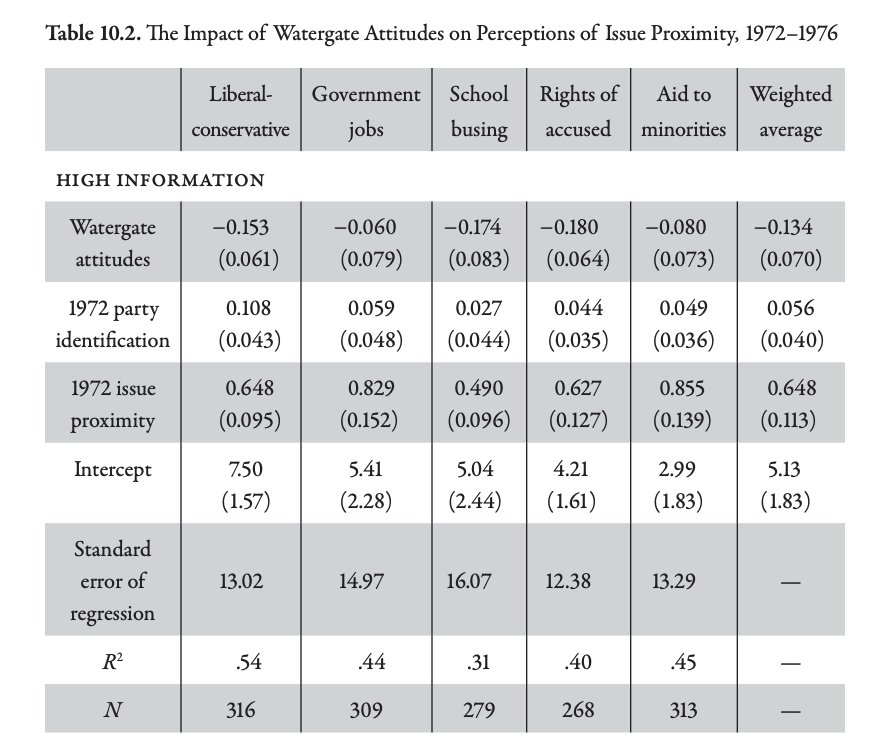
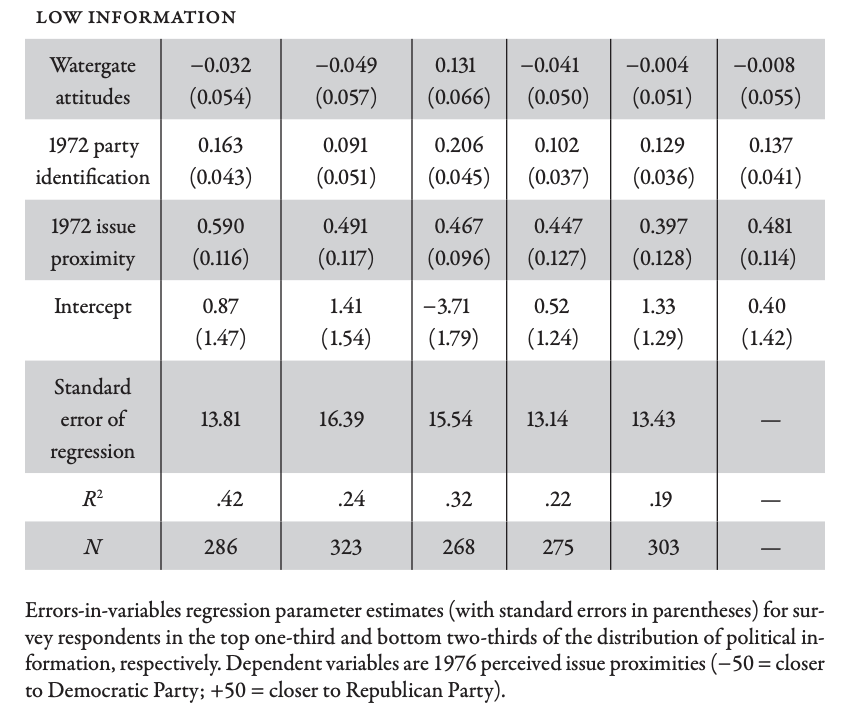
Achen and Bartels conclude by considering the role of partisan identities in politics, and look at:
If identity shapes cognition:
Partisans compress distance between themselves and their party.
They exaggerate distance from the opposing party.
Identity influences perception — not just preference.
We should observe:
Partisanship predicts factual misperceptions.
Information does not eliminate identity-based distortions.
Implication:
If partisanship structures evaluation:
Scandal effects extend beyond the scandal domain.
Partisan identity structures policy reactions.
Identity organizes political reasoning broadly.
Across cases:
The pattern is consistent:
Social identity shapes:
Is this a problem for democracy?
Huddy offers several critiques of Democracy for Realists:
Why does she make these critiques? How compelling are they?
Let’s pick these questions up at the start of class on Tuesday

POLS 1140
Social Identity